A Minimum-Stay Exception Needs a Register
A two-night exception can look like a small promotion, until it changes which inventory promise still holds.
When a supplier temporarily permits a market to bypass a three-night MLOS rule, the exception cannot remain a sentence in a sales email. Property, stay window, channel, rate plan, inventory cap, approver, and withdrawal time need to travel as one commercial object that content, distribution, and settlement can all inspect.
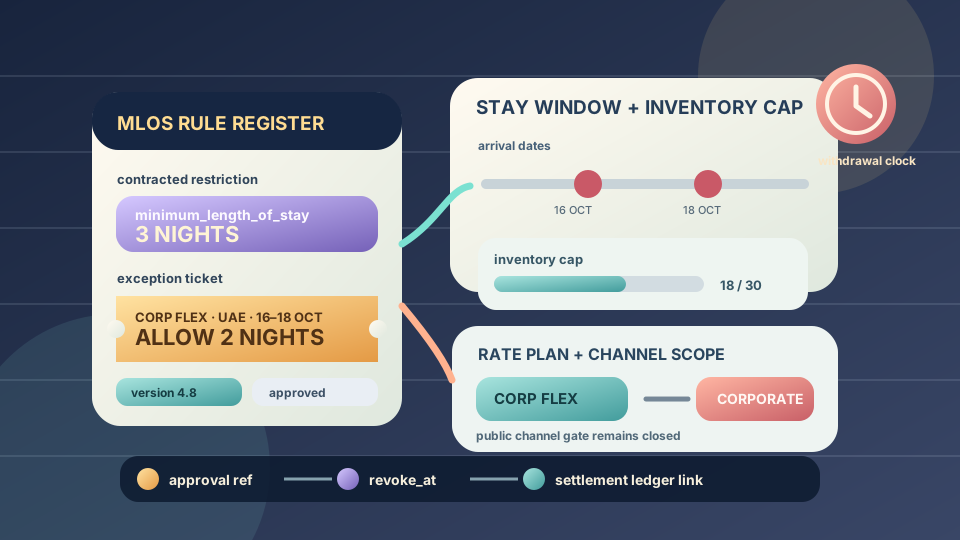
A peak-period contract says minimum_length_of_stay = 3. Then a brief note arrives: the corporate market may book two nights this weekend. People understand the sentence quickly; systems need a sharper answer. Which arrival dates qualify? Does it apply only to Corporate Flex, or to every rate at the property? May it stack with a promotion? Who watches the inventory that was planned around three-night stays? Without one bounded object, “allow two nights” tends to become a permissive interpretation that spreads through an interface.
A minimum-stay exception register is not paperwork for its own sake. It gives a commercial concession a shape: property_ref, stay window, market, channel, rate_plan_ref, inventory cap, approval reference, and revoke_at on one row. Distribution receives an executable, versioned rule rather than prose it can paraphrase. Content teams can state a limited offer without turning it into a permanent promise.
The tradeoff is real. Each exception asks the supplier for scope, revenue for an inventory cap, and distribution for a precedence rule between the old restriction and the new one. Skipping that work may put an offer in market sooner. It can also let a two-night corporate window leak into public channels, combine with a discount it was never meant to combine with, and leave settlement to explain why a booking no longer resembles the contract.
For HotelByte, the register belongs with the distribution promise, not in an operations notebook. Approval creates a visible edge; withdrawal still leaves a common record for channel, content, and settlement. Minimum stay then stops being a one-time favour and becomes a rule that can be sold, explained, and safely taken back.