A Time Zone Is a City, Not Just an Offset
Kathmandu runs fifteen minutes ahead of India. Get that wrong once and you remember it.
The portal’s time zone picker, shared by company settings and Lookout schedules, now uses a complete city directory: 555 city names each in Chinese, English and Arabic, searchable by local name, English name or standard time zone code, each showing its real offset right now.
A price-monitoring job is set to run at 8 every morning. Whose 8 o’clock? The time zone in company settings decides how deadlines are displayed and when scheduled jobs start. The old dropdown translated only a dozen hand-picked cities and showed the rest in English; some zones had lost their original representative city, and an old zero-offset setting was displayed as London.
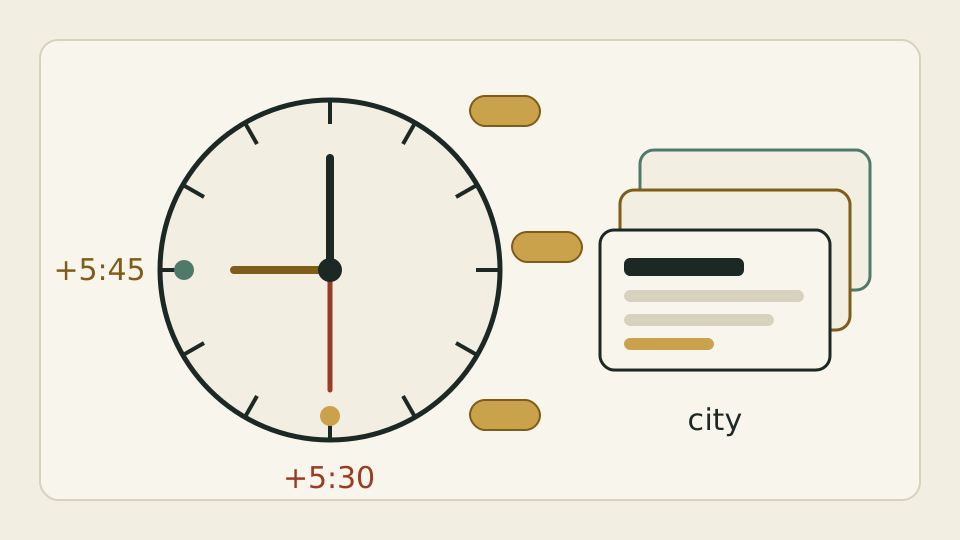
A time zone is not a number. Two cities with the same offset today may differ in summer. India is UTC+5:30, Nepal UTC+5:45, and some islands sit at UTC+12:45. Picking “UTC plus something” looks simple until the day the clocks change. And people are not looking for an offset at all; they are looking for their city, in their own language.
The new picker generates Chinese, English and Arabic names from a fixed release of the Unicode city-name data: 555 cities each, covering the full time zone directory the browser supports. You can search by local city name, English name, or a current or older standard time zone code, ignoring case and accents, and technical names such as UTC and GMT are found too. Only zones confirmed equivalent are merged; different regions with the same offset stay separate, each showing its real offset right now. Hand-translating city by city would never have finished.
Saved settings read back exactly as stored, so nothing switches zone behind your back unless you change it, and an old zero-offset setting now shows as UTC. Switching the interface language switches the city names in the picker too. The change lives entirely in the portal; nothing new is stored on the server.