An Accessible Room Is Not a Label
The shower chair in the bathroom is quiet, but the question it asks is not small.
An accessible room is not a checkbox in a filter. The shower chair, doorway width, grab rails, bedside turning space, outlet height, and distance to the elevator all decide whether a guest can actually use the room.
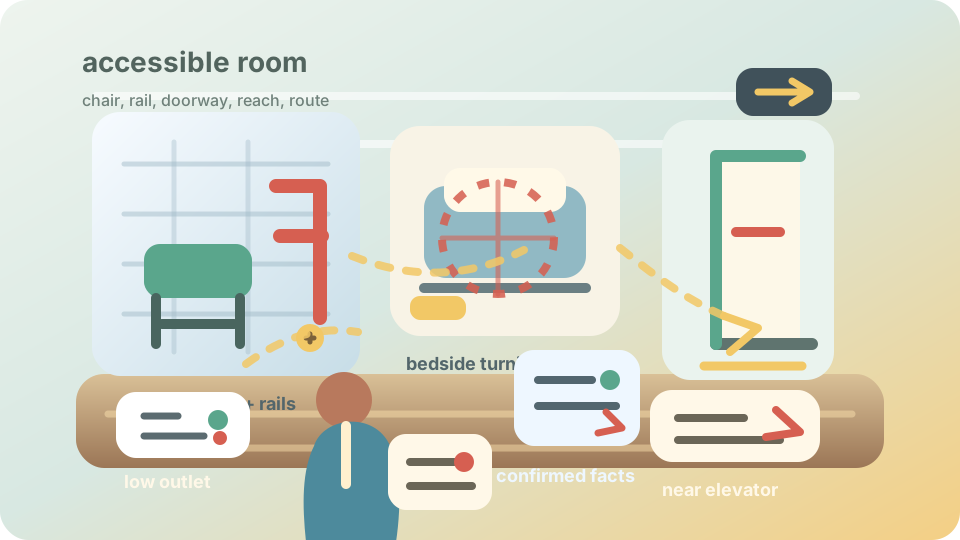
At 2 p.m., when a housekeeping supervisor walks into an accessible room, the bed is often not the first thing she checks. She looks at whether the bathroom door opens fully, whether the shower chair is steady, whether the grab rail is loose, whether there is enough bedside space for a wheelchair to turn, and whether the outlet is low enough to reach without bending. There may be a small note on the desk too: guest needs to be near the elevator, companion in the next room, bathroom floor must not be too slippery.
Those details do not fit neatly inside one “accessible room” label. A label is useful for filtering. It is weaker as a promise. For the guest, the difference is not whether the page shows an icon. It is whether they can shower independently, place a mobility aid beside the bed, and find a rail within reach when they use the bathroom at night. What the hotel sells is not a gesture of goodwill. It is a space that can actually be used tonight.
The tradeoff is real. Distribution channels need short information. Suppliers do not want to maintain too many fields. Hotels know that the actual condition of each accessible room can differ: one may have enough doorway width but a tight shower area, another may have rails but sit far from the elevator, another may work for an older guest with limited mobility but not for a wheelchair user who needs turning radius. Too vague, and the guest carries the risk. Too detailed, and the checklist may become something no one keeps current.
For HotelByte, hotel distribution infrastructure can treat this room type as a set of judgeable service conditions, not as a handsome label. A good system helps hotels state the key dimensions, equipment, location, confirmable items, and limits honestly. Suppliers know which facts must stay true. Customers can decide before booking. Accessibility is not extra kindness; it is describing “can this room be used?” with enough precision to matter.