An Apology Should Carry the Next Step
The support headset is light, but the sentence has to hold courtesy, fact, and one executable action.
In travel, an apology is not useful because “sorry” was translated correctly. It has to explain what happened, who is handling it, what the guest should do now, and how the hotel or supplier will catch the next move.
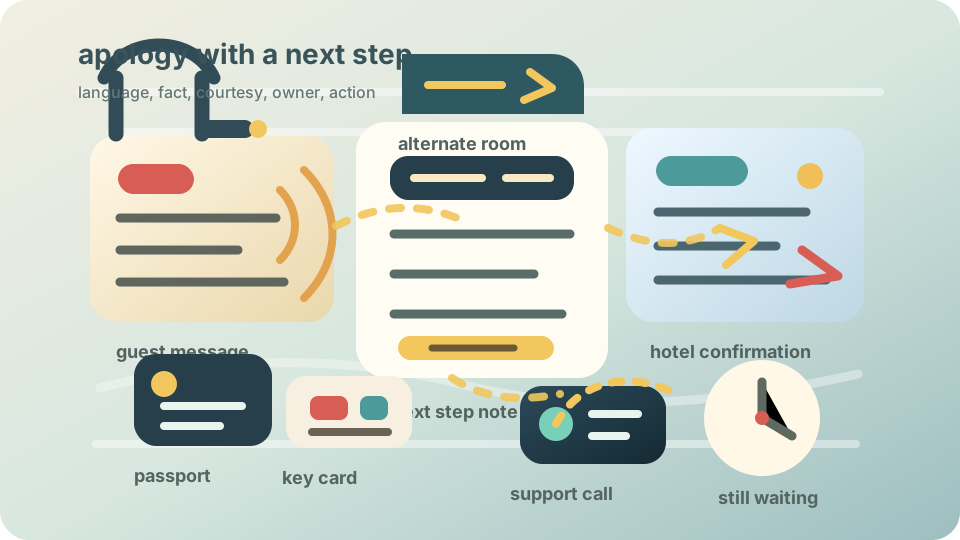
There is a small kind of mess on a support desk: the guest’s Chinese message on the left, the hotel’s English confirmation on the right, and a handwritten note in the middle saying, “Do not promise refund yet; confirm alternate room first.” The person wearing the headset is not writing a pretty email. They are moving an apology from one language to another without softening the facts or hardening the human part.
“Sorry” does not solve a travel problem by itself. The guest needs to know whether the room type is still being confirmed, the payment is being checked, or the supplier is looking for an alternative. They also need to know what to do now: stay in the lobby, wait for a call, send one more ID photo, or go have dinner first. An apology with only feeling creates more anxiety. An apology with only process pushes the guest back into a form.
The hard part of multilingual support is that each language has its own sense of proportion. In Chinese, too much directness can feel cold. In English, too much softness can sound like responsibility is being avoided. Internal hotel shorthand often cannot be handed to the guest as written. Translate too generously, and support may promise what the system has not confirmed. Translate too cautiously, and the work already happening behind the scenes disappears.
For HotelByte, hotel distribution infrastructure can treat these sentences as part of service, not as last-minute polish added by support. If order status, supplier reply, available options, fee boundaries, and contact owner live clearly in one place, support has to guess less and the guest waits through one fewer round. A good apology does not need to be long. It needs to tell the traveler: this is not finished, but someone is already holding the next step.