The Calendar Keeps Rates from Pretending It Is Quiet
The colored calendar on the revenue desk looks a little messy, but it can smell the city before a neat curve does.
Room rates do not simply grow out of a model each morning. Trade shows, holidays, concerts, flight changes, group cancellations, and citywide inventory all push revenue teams between raising too early and reacting too late.
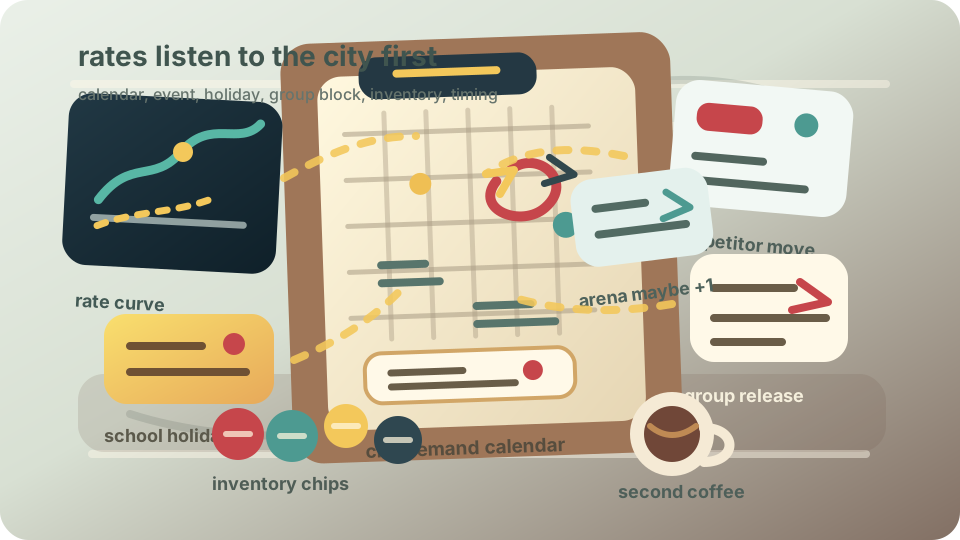
At ten in the morning, the revenue manager clips a green highlighter to her notebook and studies the monthly calendar on the desk. A trade show is circled beside Friday. A school-holiday sticky note sits on Sunday. Near the end of the month, a small line says the arena may add one more show. The screen has curves, price recommendations, and competitor moves, of course. She still looks at the paper first. It holds the part of the city that has not fully become data yet.
Hotel pricing is easy to mistake for a cold string of numbers. Each rate move is actually answering a practical question: should tonight protect occupancy first, can the weekend wait for stronger demand, should inventory return quickly after a group release, is a competitor drop a signal or just noise? Raise too early and steady demand walks away. React too late and a scarce date sells like an ordinary Tuesday.
The handwritten calendar is useful not because it is smarter than the system. It puts the things people know, before every field has caught them, on the same surface: exhibitions, holidays, weather, flights, school schedules, repeat-account habits, and someone saying, “that day traffic will be rough.” Some clues are reliable. Some are only a nudge. Part of revenue work is deciding which one deserves a price change and which one merely deserves another look.
For HotelByte, distribution infrastructure does not need to turn that judgment into mystery. The better job is to let rates, inventory, notes, channel timing, and human confirmation see each other. Then, when a revenue team changes a price, it is not pushing a lonely number around. It is arranging the supply-and-demand mood of a few days in a real city. The calendar does not decide for people. It reminds them that a quiet date may already have something moving underneath.