The Detour Should Arrive Before the Guest
The hotel has not moved, but a row of orange cones has sent the taxi to another street.
An unchanged address does not mean the arrival path is unchanged. Construction barriers, temporary drop-off points, walking entrances, and driver routes can turn a simple hotel arrival into service that needs to be explained early.
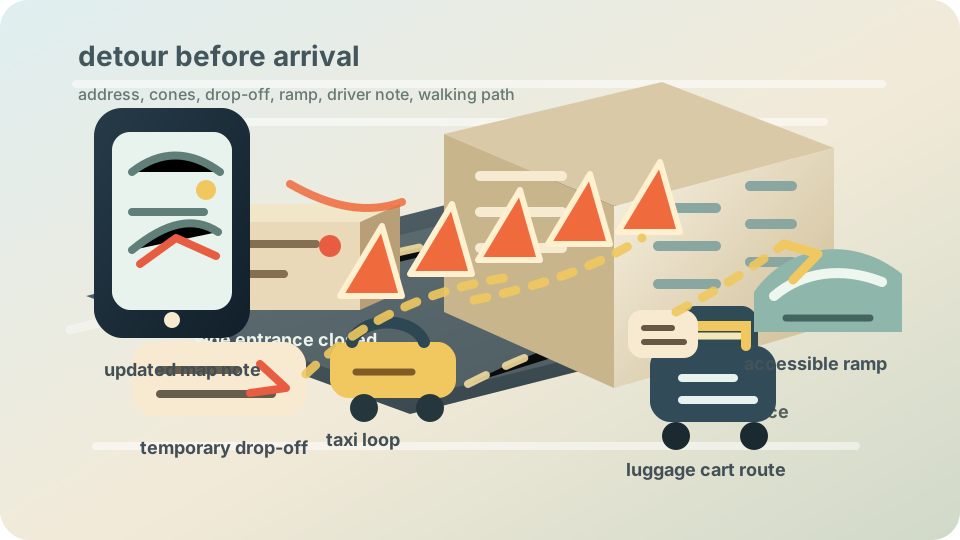
At nine in the morning, a row of orange cones appears outside the hotel. The side entrance that took cars yesterday is behind a barrier, taxis have to loop to the corner, and the luggage cart now comes down a different ramp. The hotel address has not changed. The map pin is still in the same place. But for a guest fresh from the airport, pulling a suitcase, with a phone running low, the useful information has moved.
The trouble with a detour is that it is easy to treat it as something to explain on site. The front desk knows. The bell team knows. Nearby drivers may learn it by lunchtime. Booking confirmations, pickup notes, supplier remarks, map links, and support wording do not always change together. So the guest stands at the wrong curb with the right address, the driver calls from a doorway where stopping is banned, and hotel staff shout, “Just walk a little farther,” over construction noise.
There is an unglamorous tradeoff here. Write the guidance in too much detail, and it expires as soon as the work crew moves the barrier. Keep it too generic, and families with children, guests with limited mobility, and business travelers rushing to a meeting turn a few hundred meters into a bad start. Good arrival guidance does not turn the city into a manual. It simply admits, at the right moment, that road conditions are part of service.
For HotelByte, hotel distribution infrastructure can treat this temporary information as real content. Entrance changes, temporary drop-off points, walking time, accessible route, driver note, expiry time, and the person who confirmed it should be visible between suppliers, customers, and hotels. A detour does not need to sound dramatic. It just needs to arrive one step before the guest.