The Cancellation Footnote Has to Reach the Channel
A tiny line at the bottom of a contract page stops being tiny once it lands on a channel calendar.
Cancellation risk often hides in footnotes: hotel local time or channel time, whether public holidays extend the window, whether groups are exempt, and exactly when free cancellation begins or ends. Only when the footnote becomes executable dates, markets, and responsibility boundaries can the order be explained consistently later.
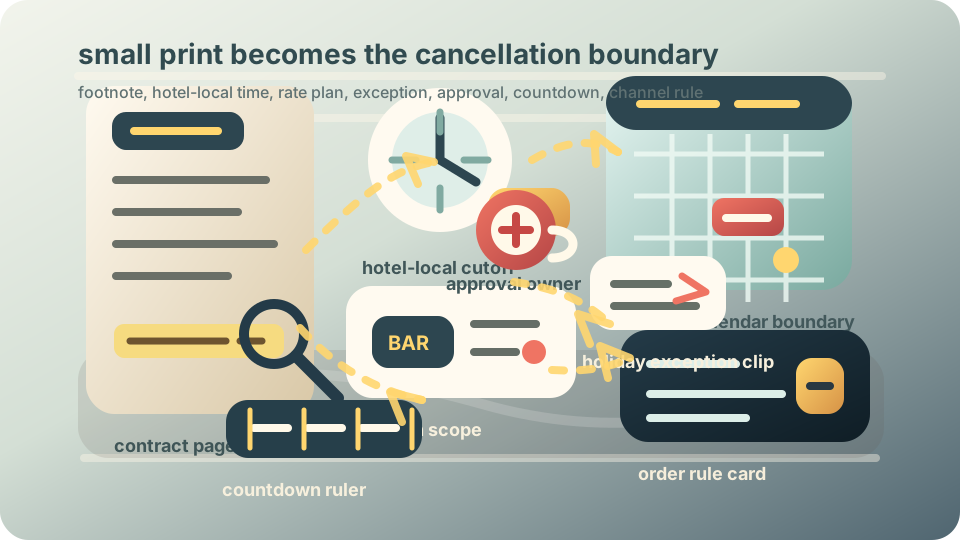
At the bottom of page 8, the contract carries one small line: free cancellation cutoff follows the hotel’s local time, and public holidays do not extend it automatically. It has none of the drama of a rate sheet and none of the ceremony of a signature page. Once it reaches a channel, though, that footnote becomes the date a buyer sees, the promise support repeats, and the rule a supplier quotes during settlement.
The trouble begins with things that look close enough. Hotel local time, traveler time zone, channel display date, and charge time may point to the same night without sharing the same boundary. Add group allotments, event rates, non-refundable packages, and holiday exceptions, and “free cancellation three days before arrival” stops being enough. It sounds friendly. In practice, it is a ruler with no marks.
Moving the footnote into a channel does not mean pasting the contract paragraph in full. Too legal, and people cannot use it. Too conversational, and responsibility disappears when the refund is questioned. The useful translation pins down a few things: market, room type or rate plan, cutoff time zone, final free-cancel moment, exception condition, and who may approve a change. Miss one pin and the later explanation tilts.
For HotelByte, this small print deserves a real place in distribution infrastructure. A policy should not stay trapped in the margin of a PDF, and it should not be flattened into a green “cancelable” label. The footnote’s job is to put a commercial promise onto an executable timeline. It is small. Once the order starts counting down, it is the boundary itself.