The Handover Book Keeps the Night
A hotel is not quiet at 3 a.m. It is simply storing care in a notebook so the next person can carry it forward.
The night-shift handover book is not back-office trivia. It is evidence of how a hotel keeps promises moving across shifts, languages, and system boundaries, often through small details a guest will need in the morning.
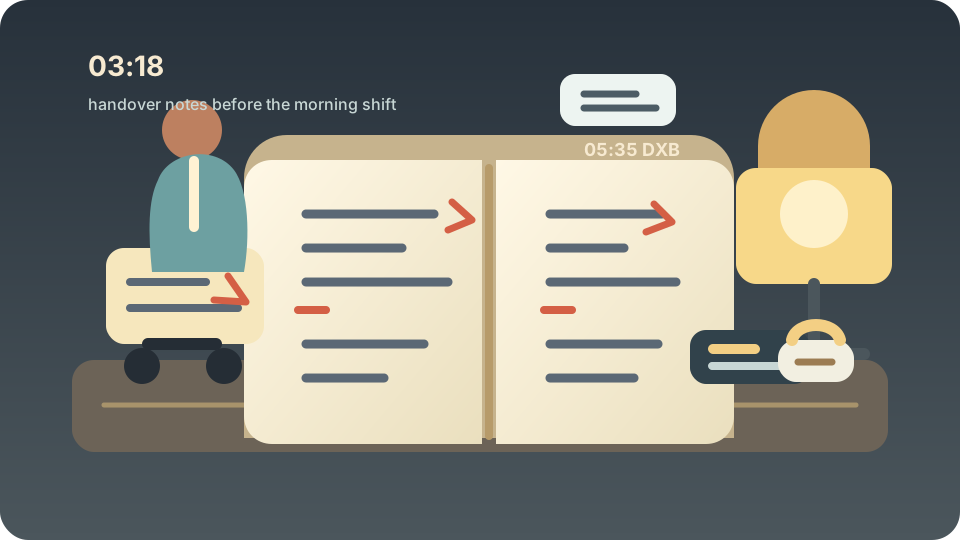
A hotel night-shift handover book rarely looks grand: one page, a few lines, an asterisk beside a room number. “Room 1208 arrived after midnight, needs a 7 a.m. taxi to the airport.” “Room 316 has a child with a fever, please send plain congee at breakfast.” “Supplier note says twin beds, but the guest called to ask for a king; adjust first if one opens.” These sentences do not sound like product copy, but they are often closer to the real shape of service than product copy is.
The power of the handover book is that it admits hotel work is not completed by one person in one sitting. What the day shift promised, the night shift must remember. What the night shift discovers, the morning shift must be able to continue. A guest should not have to explain the same anxious detail again just because a new colleague is behind the desk. The book turns “I heard you” into “the next person will know too.” In travel, that continuity is often more valuable than surprise.
Distribution systems are usually good at storing structured fields, but less good at preserving these small contextual promises. Supplier notes, guest requests, flight changes, room-type adjustments, deposit explanations, breakfast exceptions: when they are scattered across screens, people have to rebuild the story from fragments. The handover book offers a better lesson. A useful system does not only store facts; it helps the next person understand why a fact matters.
HotelByte cares about hotel distribution infrastructure, and that means caring about this plain form of service transfer too. AI can summarize, workflows can remind, and APIs can synchronize, but the goal is not to make front-desk teams behave like machines. It is to help machines protect the care those teams have already offered. The real value of the notebook at 3 a.m. is that a guest’s journey can still be remembered after the shift changes.