One Invoice Line Can Save Three Systems Three Days
An invoice is not the final screen of finance; it is the gate before finance.
Settlement disputes are often slow because teams do not agree they are reading the same bill first. Putting invoice_id, room_type_line_id, settlement_amount, and distribution_note into one auditable row lets everyone quickly answer who should amend, who should compensate, and what should be replayed.
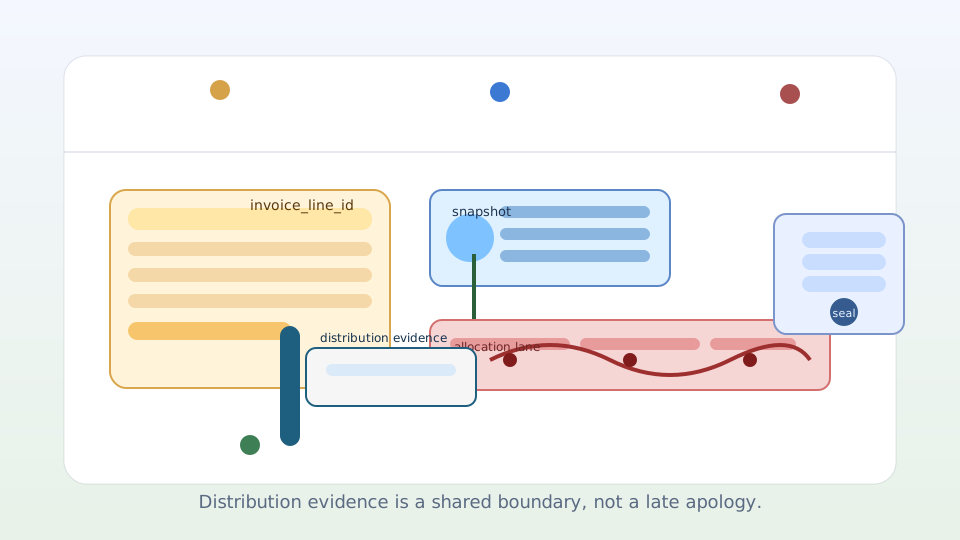
When an invoice mismatch appears, teams often jump straight to reports. The costly part is usually the first ten minutes of argument over the same question: is this one bill or three different interpretations? The supplier file carries invoice and tax codes, channels carry distribution snapshots, and settlement carries allocation chains. Without a clear distribution_invoice_line, each side can defend a different truth.
A better way is to move this debate to item-level objects. A settlement row should carry invoice_line_id, source_file, effective_from, charge_code, and allocation_target together. When support says “the payment was already sent,” you can now answer from one row: which segment this amount belongs to, which channel it was exposed to, and whether it entered the same settlement batch.
There is a tradeoff. Stronger row-level binding makes urgent adjustments slower. But speed from loose objects is often only saving minutes, while adding days of explanation. In distribution, repeated recalculation costs more than a slower publish.
This object is not only a finance concern. It is closer to a distribution checkpoint: every gate should open with a traceable ticket. A reviewable invoice row turns dispute handling into a replayable boundary, so teams spend less time rearguing and more time deciding where to reduce repeated operational risk.