Latest Check-In Is a Doorbell
After a night flight, the guest is not really reading a rule. They want to know whether the door will still open for them.
Latest check-in time is not a cold restriction field. It connects flight delays, night-shift desks, access doors, deposits, supplier notes, and guest reassurance, so it should read like arrival guidance someone can act on.
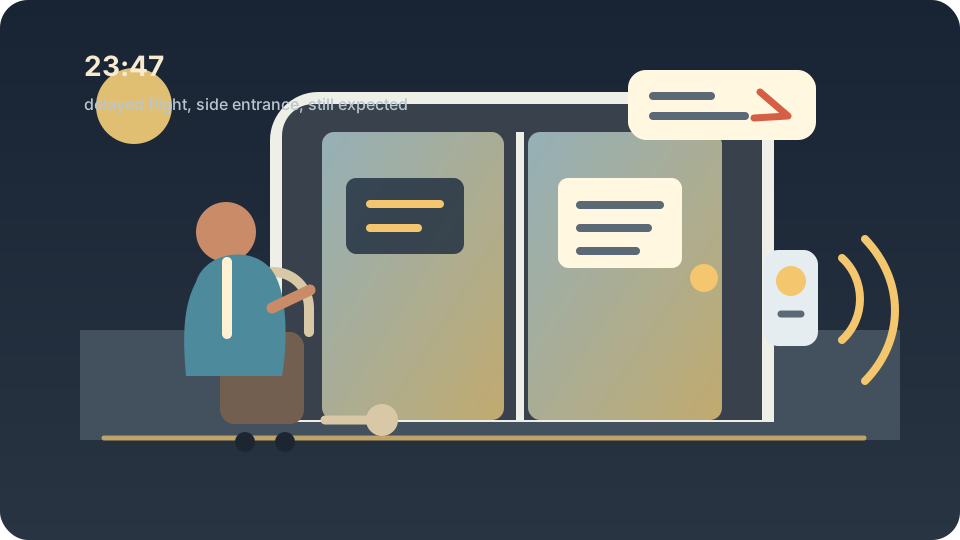
“Latest check-in: 23:00” looks like a tidy rule. It is short, precise, and easy to place inside a rate policy. But when a guest arriving on a night flight reads it, they are usually not thinking about the rule itself. They are asking a more practical chain of questions: what if the plane is late, will the desk still be staffed, will the door be locked, which bell do I press if the taxi drops me at the side entrance, and will I need to prove my booking all over again?
A good front-desk explanation rarely stops at the time. The useful version carries conditions: “After 23:00, please contact us in advance and we will hold the room. When the main door is closed, use the glass door on the left. The night colleague will check your passport and pre-authorization. If your flight is delayed, send us the flight number.” None of that is decorative copy. It pulls a late-arriving guest out of uncertainty. Latest check-in is really a doorbell: it tells the guest how they can still be noticed after the ordinary hour has passed.
A distribution product creates avoidable confusion when it treats this only as a `latest check-in` field. Some hotels have a 24-hour desk and simply want advance notice. Some serviced apartments use self-check-in codes. Some small properties genuinely have no staffed desk after a certain hour. If all three become the same “23:00,” guests make more calls, suppliers handle more changes, and night-shift staff repeat explanations that could have been written clearly upstream.
For HotelByte, building AI-native hotel distribution infrastructure means treating these late-arrival notes as service language, not just policy text. A good system should help suppliers organize time, entrance, contact action, exceptions, and the guest’s next step in one place. Travel is worth careful work because someone may be standing at a hotel door after midnight with a suitcase. The product’s job is to make that moment less anxious and more like, “I know where to press.”