The Lost-Property Box Keeps Small Trust
On a back-office shelf, a pair of sunglasses and a charging cable are still waiting for their names.
Lost property is not clutter. It connects guest memory, hotel evidence, shift-to-shift work, and the cost of sending things home, reminding distribution teams that service can continue after a stay ends.
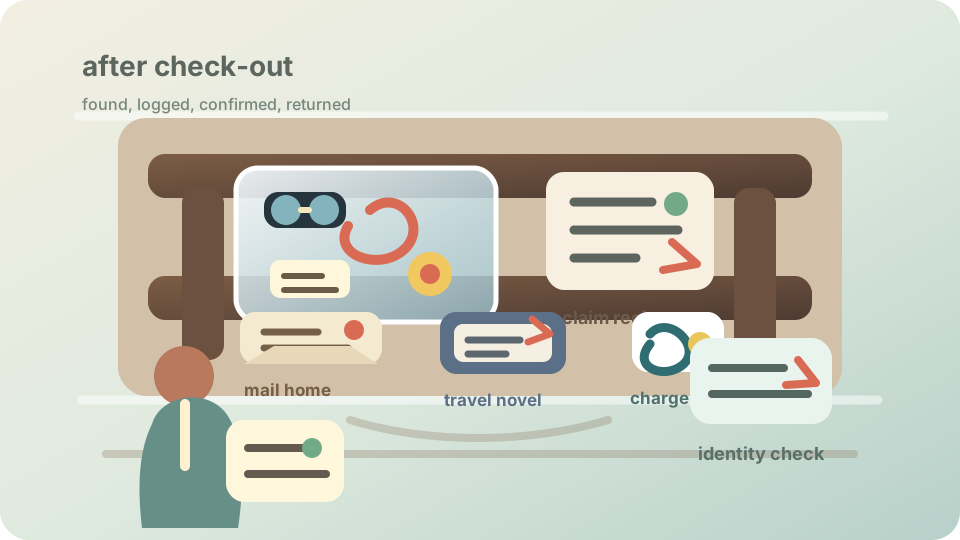
After the check-out rush, many hotels have an unglamorous corner in the back office: a clear storage box, paper tags, sealed bags, and a register. Inside might be sunglasses, a child’s hair tie, half a travel adapter, a novel with a boarding pass tucked inside, and the most common resident of all, a charging cable. None of it looks dramatic. Each item asks the same quiet question: after the guest leaves, will the hotel still help hold the trip together?
The seriousness of the lost-property box is that goodwill is not enough. Who found the item, in which room, when it reached the back office, what it looks like, whether it can be mailed, who pays postage, how long it is kept, and how identity is checked when someone claims it: these small steps need a trail. Too loose, and trust becomes a verbal promise. Too heavy, and one charging cable turns into half a day of administration.
There is a very travel-shaped tension here. Guests want the hotel to remember like a friend; the hotel has to behave carefully like an institution. One person is trying to recover a child’s toy. Another has lost a passport, medicine case, or work laptop. Those objects should not all be handled in the same voice. Good service keeps its balance between warmth and evidence, so the guest does not feel interrogated and the staff are not left carrying risk from memory alone.
For HotelByte, hotel distribution infrastructure can learn from this box: the relationship does not always end at check-out. Support notes, guest identity, hotel contacts, mailing address, fee confirmation, and responsibility boundaries may reconnect after departure into one small chain. The system does not need to make lost property theatrical. It just needs to help everyone guess less, so the sunglasses, the cable, or the novel with a boarding pass can quietly find its way home.