The Parking Field Cannot Only Say Yes
A small checkbox in the product catalog gets unexpectedly loud on a sold-out weekend.
“Parking available” looks like amenity information, but it carries fee, reservation, vehicle height, onsite or offsite location, overnight access, and EV space rules. If the field is too light, the channel sells convenience while everyone later explains the boundary.
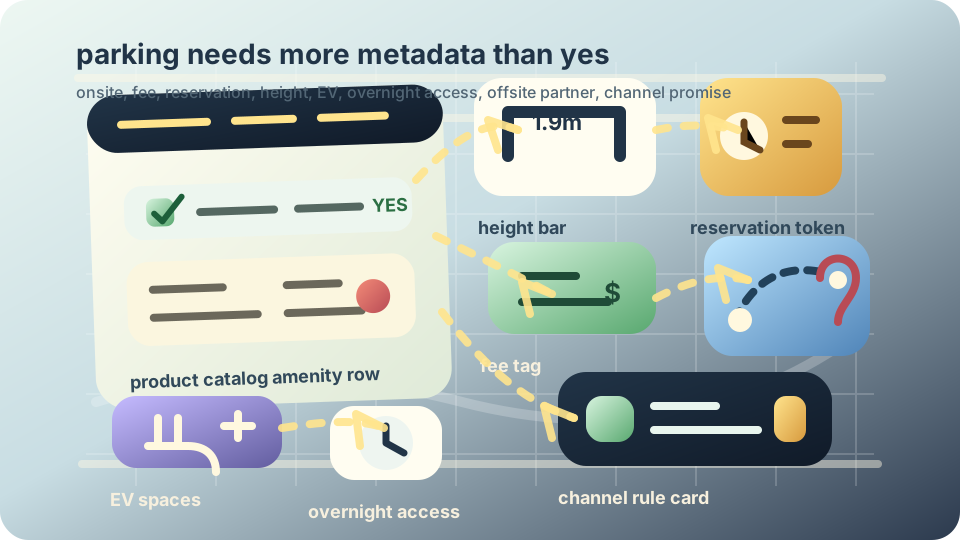
One row in the product catalog is easy to skim past: Parking available. A green tick sits beside it. It looks clean, almost reassuring. Then the supplier note adds the part the tick cannot hold: underground height limit 1.9 meters, weekend reservation required, only two EV spaces, and the partner lot has no midnight re-entry. The green tick is not wrong. It is just too small for the job.
Parking is very good at pretending to be a simple amenity. For a channel, it is a label that may help conversion. For a hotel, it is a bundle of limited bays, fee rules, security flow, partner-lot contracts, and local traffic constraints. “Free parking” and “paid parking by reservation” are not wording variants. They change price, responsibility, and expectation. Large SUVs, rental cars, event groups, charging vehicles, and overnight exits each ask a different question.
Making the field precise has a cost too. A page should not become a parking manual, and a channel does not want one facility to take half the screen. Useful metadata can stay compact. It just has to pin down the important pieces: onsite or offsite, free or paid, reservation required or not, height or vehicle limits, overnight access, and whether EV spaces are guaranteed. Miss one pin and support plus supplier operations spend the post-booking hour teaching the green tick what it should have said.
For HotelByte, amenity fields should do more than decorate the sellable page. They should admit that yes is not a complete answer. When a parking field is written well, the reader sees a few clear choices; behind the page, the business avoids selling convenience as a promise and then translating the promise back into restrictions.