Rate-Table Order Decides the Offer Before Discount Does
One field order can shift a sellable boundary across markets before a discount is ever noticed.
Supplier rate sheets often cross many channels. If rate_plan_id, fallback_plan_id, channel_scope, and effective_window stay unbound, sales and settlement paths diverge. Defining inheritance order and override scope in one traceable rule row keeps the offer boundary recoverable.
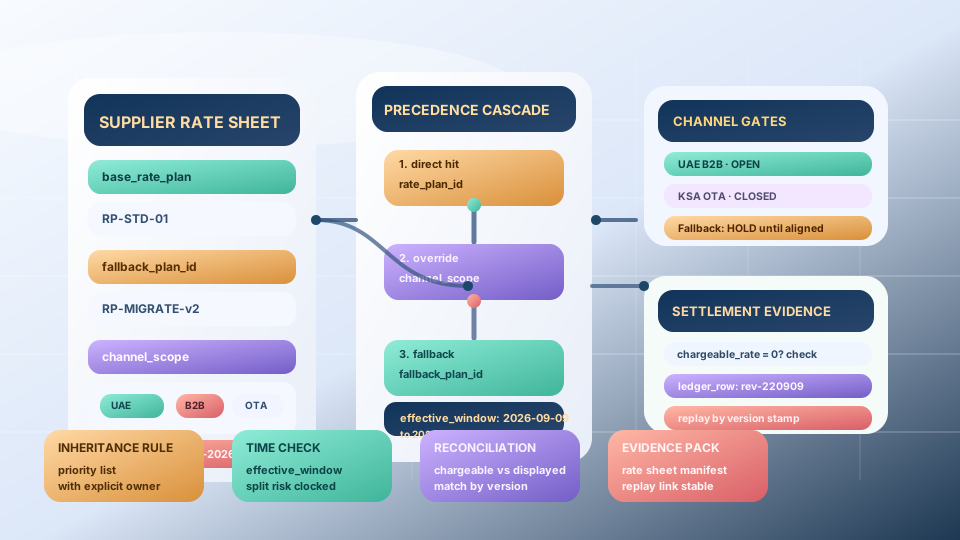
A supplier update can feel simple: a new base plan, a new fallback id. The filename stays familiar. But one channel begins to read the rate plan as a new rule set while another still resolves from an older fallback path. Suddenly, one room appears sellable with a different promise in two markets. The issue is not a mistaken click; it is two object chains with different precedence order.
The operational impact is concrete. Channel A keeps attracting bookings with the new plan. Channel B shows legacy currency and legacy terms. Support inherits a customer claim that “we sold at X.” Finance closes books against Y. What starts as a content update becomes an ownership negotiation: whose reading is the real one.
This is a problem of ordering semantics, not volume. rate_plan_id is not decoration; it defines which rule wins first. fallback_plan_id decides what absorbs a miss. channel_scope limits where that boundary applies. effective_window says when this replacement should be active. If those fields are not versioned together in one object, channels stop agreeing after 30 minutes.
The fix is not heavier governance for its own sake. It is a practical tradeoff: keep updates fast while preserving replayable intent. Supplier updates need a lock row for rate-sheet precedence. Channel config needs to consume that row unchanged. Settlement needs a time-stamped lineage between new and fallback rules. That is what turns a field tweak into a bounded commercial promise instead of a late-night ambiguity cycle.