A Retired Room Code Can Keep Collecting Debt
The greyed-out row in the mapping table says nothing, while nearby channel inventory keeps answering on its behalf.
Retiring a room code is not finished when a row becomes inactive. If channel mapping, rate plans, inventory pools, historical orders, and settlement rules do not move together, the old code keeps creating explanation work inside new bookings.
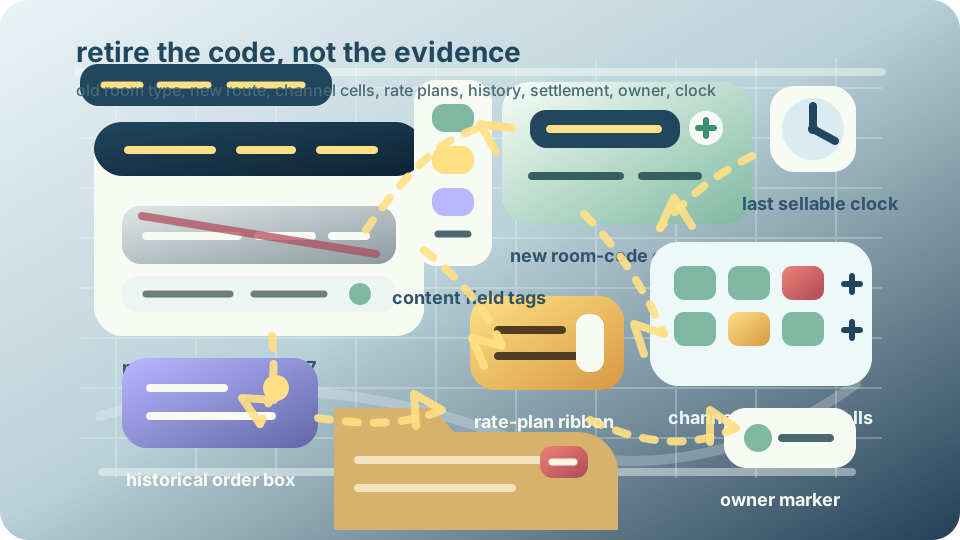
Row 317 of the mapping table says DLX-KING-OLD. The status column is already inactive, with a short note beside it: merged into DLX-KING-CITYVIEW. It looks done. But the channel mapping on the right is still lit, two rate plans still point at the old code, and a few inventory-calendar cells have not migrated. A retired room type is quietly still reporting for work.
The difficult thing about a room code is that it is not just a name. It is closer to a key. It opens price, inventory, photos, bedding, cancellation policy, commission, breakfast, and settlement ownership. Change the key in only the product catalog, and a channel may still sell the old door label. Change only the channel, and historical orders may lose the room they need during support and reconciliation.
That makes deprecation a handoff, not a delete. How long the old code remains readable, which orders keep the old interpretation, which channels must accept the new code, which content fields inherit again, and after what date new inventory is rejected all need to be stated. Move cautiously, and the table keeps a few grey shadows. Move too sharply, and orders that have not settled yet get cut away. There is no elegant posture here. There is only the boundary.
For HotelByte, room mapping should not be a back-office table everyone avoids. It should show the old code’s downstream links, migration state, last sellable moment, and owner. When a code retires well, readers do not notice a dramatic change on the page. That is the point: new orders take the new route, old orders keep their evidence, and tomorrow no longer has to pay for a greyed-out field.