Before Removing a Supplier, See What It Takes With It
A delete button should not just ask “are you sure?”. It should say what will be gone.
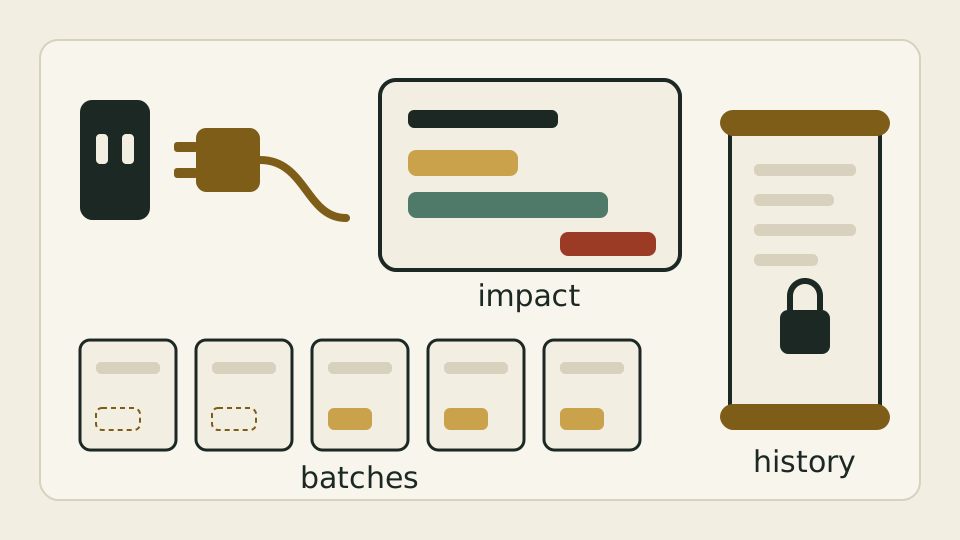
Supplier pages gain Remove supplier. The confirmation first shows the impact: how many connections go, and how many products in your own catalogues carry that supplier’s IDs; you confirm by typing the supplier’s full name. The IDs are then cleared in batches, and completed price-comparison runs are no longer recalculated against today’s catalogue.
Until now, the only way to retire a supplier from your business was to delete its connections one by one; once the last one went, the supplier quietly dropped out of your enabled list. There was no explicit remove, and nothing told you how many products in your catalogues still carried that supplier’s IDs.
Remove supplier puts the impact before the confirmation. When the dialog opens it fetches two numbers at once: how many connections you hold for this supplier, and how many products in your own catalogues carry its IDs. The first is read straight from your settings, exact and quick. The second means going through a large number of products, too costly to do on every open, so the dialog shows a figure worked out in the background and redone once it gets old, stamped with its time, with a dash rather than a misleading zero until the first count is ready.
You confirm by typing the supplier’s full name. The removal happens as one step: every connection you hold for that supplier is deleted and the supplier leaves your enabled list, all or nothing, and running it twice does no harm. Its IDs are then cleared from your products in capped batches that resume where they stopped. Finished price-comparison runs are no longer recalculated against today’s catalogue.
The tradeoff is deliberate. The impact numbers may be a few minutes behind, but the dialog always opens quickly; the cleanup is not one big step, but every step is safe to retry. What actually stops the supplier from being asked for prices is deleting its connections. Clearing its IDs from products is tidying up afterwards.