Offers the Seller Marks, Right Under the Price
“Ask us about this one” next to a price is worth more than any banner slot.
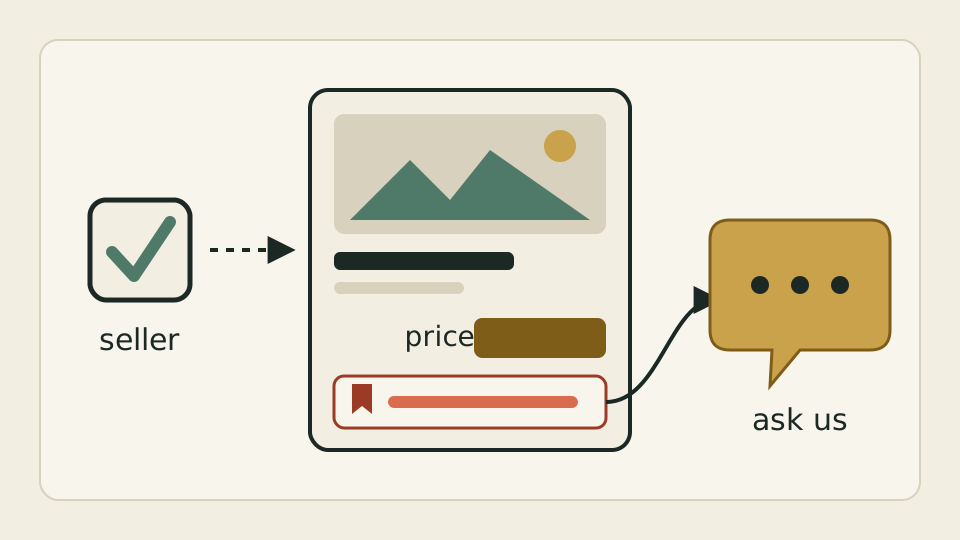
Sellers can tick Special offer in their own product profile. Storefront hotel lists and detail pages then show a hint under the price of those hotels, linking straight to the seller’s WeChat or WhatsApp support. Nothing infers a discount, and no hint appears without a valid price and a contact channel.
Many sellers have hotels worth a conversation: a negotiated package, an upgrade they can request, a better deal for long stays. Those rarely fit into a standard price and usually live in private chats. The trouble is that a guest browsing a storefront has no way to tell which hotel is worth asking about.
The first decision was who gets to say “offer”. We did not let the system infer it from price drops or supplier promotions; that risks false claims and makes promises on the seller’s behalf. The seller marks it. Product profile editing gains a Special offer checkbox that writes an existing product tag, so nothing new is added to the data and other tags are left alone.
In storefront results the mark is read only from the current row of the seller’s own catalogue, and the seller’s choice holds when platform hotel content is added to the listing, unmarking included. The hint sits under the price on list and detail pages and appears only when two things are true: the system returned a valid price, and the seller has a WeChat or WhatsApp contact channel. A click opens that existing contact path; it never falls back to the hotel’s phone or email, and never shows an inferred discount.
The “talk to us” that sellers use in private chats moves to the place where guests decide, and a click on it reaches the seller without opening the hotel card. Guests see a clear invitation rather than a discount figure of unclear origin. How prices are calculated, what is asked of suppliers and how data is stored all stay the same.