Stop-Sell Reason Carries Availability Truth
A stop-sell reason code can decide booking rights before any headline availability number.
Stop-sell info is not a side note. stop_sell_reason_code, effective_from, effective_to, and market_scope should be defined in the same traceable object, otherwise the same property appears as “bookable” in one channel and “not available” in another.
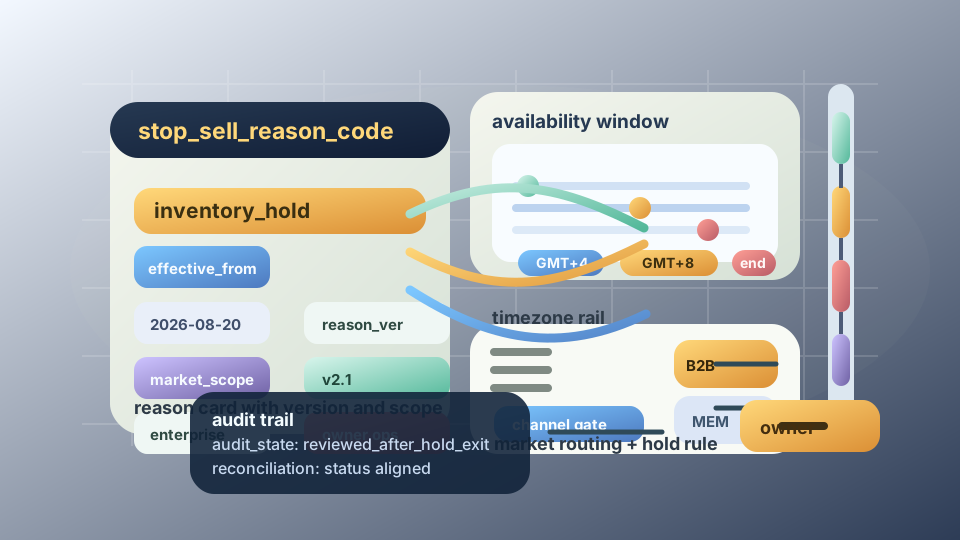
There is a field that looks like a comment: stop_sell_reason_code. It feels like metadata, but in practice it is often the gate deciding whether a room can continue through the distribution flow. A row may read: reason=inventory_hold, effective 2026-08-20 to 2026-08-22, market_scope=enterprise. Another channel, parsing only part of that row, still exposed inventory to its member pathway.
When stop-sell information is not interpreted consistently, it becomes ambiguous object-like prose. One dashboard shows a red unavailable badge, another operations panel shows daytime availability, while the supplier side treats the same period as “pending rate validation.” The same room with three states on the same day is not a fast system. It is an unbounded object boundary.
Turning stop-sell signals into auditable objects has a real implementation cost: reason code taxonomy needs versioning, market scope, timezone edges, and expiry rules; effective windows need auditability; owners must be explicit about who can move a hold back to open. The cost is visible and recoverable. The point is that the answer to “is this room sellable today?” moves from tribal memory to policy.
For supplier distribution, the outcome is not that every team trusts the same UI. It is that the same stop-sell card remains coherent across settlement checks, channel setup, and merchant notices. Even when teams are busy, they no longer need to narrate three different versions for a room that should have one availability answer.