A Transfer Route Needs One Owner
The driver’s phone, the hotel note, and the guest screenshot all point to the airport, but one turn has become three different instructions.
Transfer instructions are not finished when one sentence is translated into several languages. Terminal exits, meeting points, driver waiting rules, night entrances, and support fallback need one responsible version, or a guest can understand the words and still stand in the wrong place.
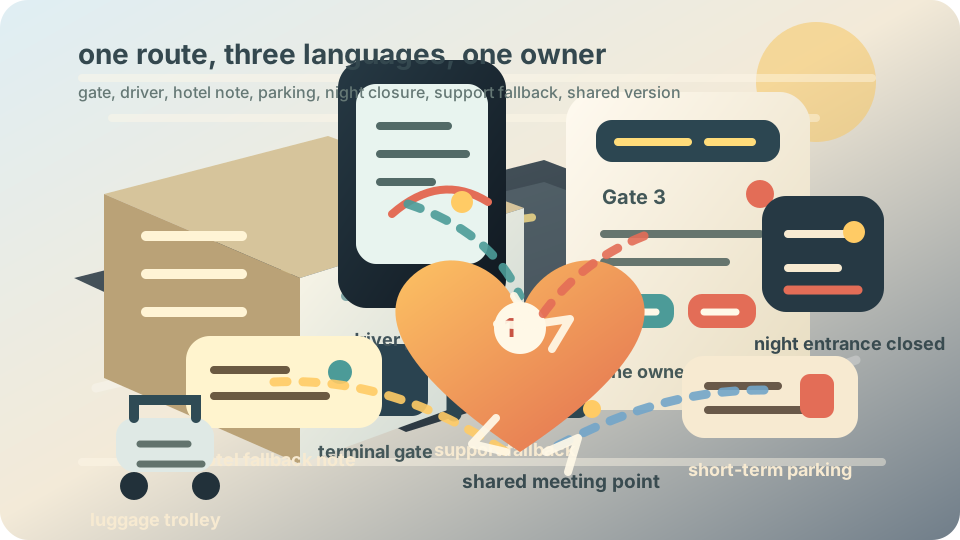
At 5:30 p.m., a destination-company dispatcher drops the airport transfer route into a group chat. The Chinese note says to wait outside Gate 3. The English says “meet near Gate 3.” The Arabic version reads more like “the driver will approach the third exit.” Then the hotel front desk adds one more line on a sticky note: if police will not allow stopping, go to short-term parking. Every sentence is trying to help. Together, they make the guest less sure where to stand.
The problem with route translation is not polish. It is responsibility getting thinner. Gate, exit, lane, parking zone, meeting point: inside an airport, these are not the same object. Can the driver stop for three minutes? Does the guest need to cross traffic with luggage? Does one door close at night? When support gets the call, who should move first? These are not small language questions. Miss one boundary and waiting turns into searching for each other.
The tradeoff is practical. Too much detail, and the guest meets a wall of rules before reaching the car. Too little, and the people most likely to suffer are traveling with children, using a wheelchair, or arriving in the city for the first time. A useful transfer note behaves like a small stage cue: where the guest stands, where the driver can reach, what the hotel knows, which sentence the destination company owns, and who sends the revised version when the route changes.
For HotelByte, multilingual route notes can be treated as part of the travel product, not a loose extra in the remarks field. Route, language, owner, update time, and backup meeting point should move together. Then the guest does not have to assemble an answer from three screenshots. There is only one transfer route. It becomes service only when everyone is working from the same version.