The Pencil at the Edge of the Map
A paper city map is creased at the front desk, and a pencil turns “you are going here” into something a guest can actually do.
Good directions do more than state a location; they arrange the next move for someone new to a city. Circles, arrows, and spoken notes on a paper map remind travel products to explain the handoff from here to there.
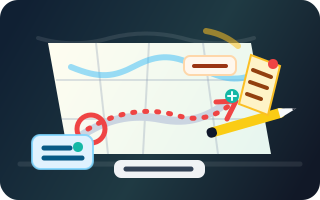
Many hotel front desks still keep paper city maps nearby. They may not be perfectly current or especially beautiful, but they do something digital maps do not always do well: a staff member can draw a circle, add an arrow, and say, “Cross here, take the second left, and avoid the riverside path at night.” In that moment, the map is not information. It is a small act of tailored care.
The first lesson from a paper map is that a stranger does not only need coordinates. They need the next step. A guest who has just landed may be carrying luggage, conserving phone battery, and reading street names without context. A red circle says where the destination is. An arrow says which way to start. A note like “this way is brighter after dinner” helps them make one fewer mistake. Good directions shrink the city to an actionable size.
Travel products often split this experience apart. The address sits in the confirmation, the map link becomes a button, transport advice hides in a note, and opening hours live on another page. Each piece may be correct, but the guest is trying to complete a movement. A product that only answers “where is it?” is handing over the map without picking up the pencil. A product that answers “what should I do next?” gets closer to the value of the front-desk gesture.
HotelByte naturally works with fields, supplier content, and distribution paths, but those details eventually land inside human movement. Organizing entrances, landmarks, walking notes, night-time cautions, and copyable addresses is not about making pages busier. It is about making the next step lighter. Good infrastructure should mean one less person standing at a corner, squinting at their phone.