A Self-Check-In Code Should Speak Softly
The porch light is on and the phone screen is bright, but the calming part is the sentence that says, “You are at the right door.”
A self-check-in code is not just the string of digits left behind after the front desk disappears. It should welcome, confirm, guide, and provide a fallback so a late guest does not feel alone with a locked door.
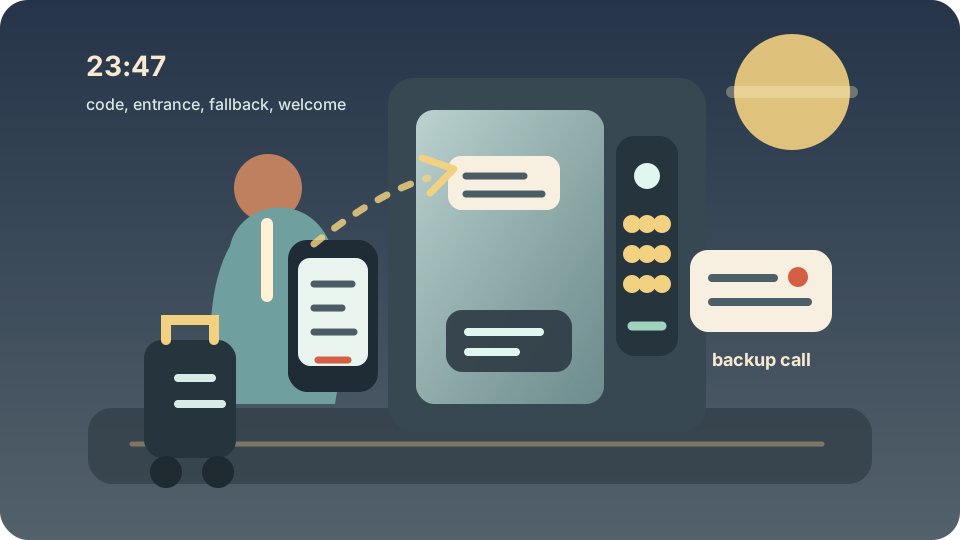
Self-check-in is too often reduced to a mechanical message: “Your access code is 482619 and works after 3 p.m.” That sentence grants permission, but it does not complete arrival. The person outside the door may have just landed on a night flight, with 8% battery, a suitcase, and a child falling asleep on their shoulder. They do not only need the code. They need to know they are at the correct entrance, using the correct keypad, and that three wrong attempts will not turn tonight into a support ticket.
A reassuring check-in code usually does a few extra jobs. It describes what the entrance looks like. It says whether to press the hash key first or type the digits directly. It explains whether the guest should push or pull when the lock turns green. It keeps the backup phone number, Wi-Fi, room number, and elevator direction in one context instead of scattering them across four emails. Most importantly, it sounds like it understands the guest is tired: “If the light does not turn on, wait two seconds and try again. Your room is already held for you.”
This is not simply warmer copy. The code activation time, booking status, deposit rule, building entrance, room assignment, and emergency contact in the supplier system all decide whether that message can be trusted. If a product stores only one `access code` field, it cannot describe the sequence behind the digits. It also cannot help the guest understand whether they mistyped, arrived too early, or hit a property-side configuration problem.
For HotelByte, hotel distribution infrastructure should treat unattended arrival as a service moment with human stakes. Automation is not valuable because it leaves the guest to solve everything alone. It is valuable when it places the reminders a staff member would have said in exactly the right spot. A good self-check-in code does more than open a door. It quietly tells the guest that the journey is still being looked after.