The Rooming List Holds the Group Together
When the coach door opens, suitcase wheels, passport folders, and breakfast vouchers all enter the lobby at once.
A tour group rooming list is not admin paperwork. It compresses traveling relationships, room preferences, ID checks, luggage routing, and tomorrow’s meeting time onto one page, where one wrong cell can make the lobby feel very long.
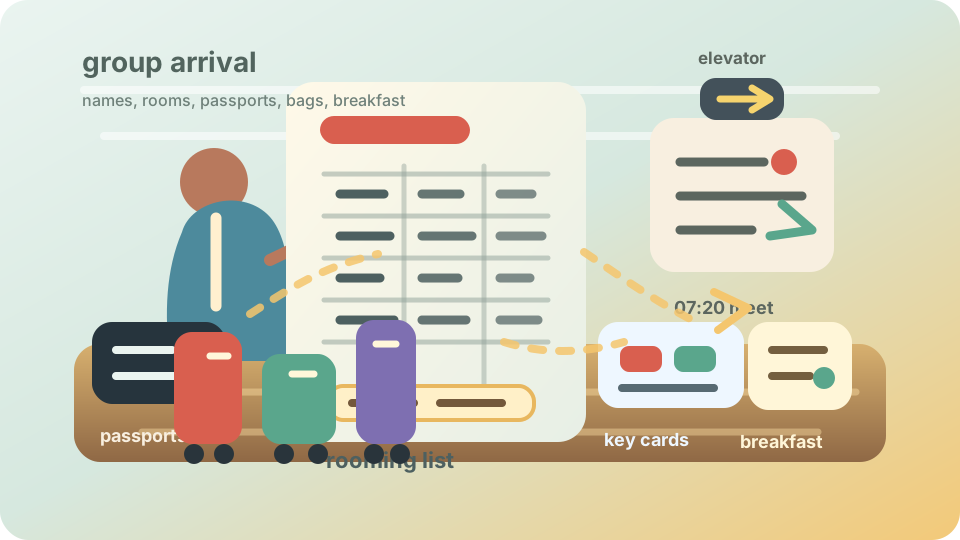
A group arrival has its own sound: the coach brake, suitcase wheels crossing stone floor, a tour leader calling names, someone searching for a passport, someone else asking for Wi-Fi first. The rooming list in the leader’s hand may be creased, but it is doing a lot of work. Twin room, king room, triple, connecting rooms, low floor, vegetarian breakfast, 7:20 a.m. departure: each row is trying to make tonight land properly for one traveler.
The hard part is that the list does not belong to one team. The travel agency uses it to organize people. The front desk uses it to check IDs. Housekeeping uses it to think about extra beds and nearby rooms. Bell staff use it to tag bags. The restaurant uses it to prepare for tomorrow morning’s rush. It is a thin string tying together actions that otherwise look separate. Too loose, and guests are called back to the counter again and again. Too tight, and reasonable changes get trapped outside the table: a last-minute room swap, an older guest who should not walk far, a child who wants to stay near their parents.
That is the tension of group travel. Efficiency wants the crowd dispersed quickly. Hospitality needs a few people to be arranged more slowly. The hotel may want every key card issued in ten minutes; guests want spouses kept together, medicine kept close, and tomorrow’s breakfast time easy to find before the bus leaves. Good rooming is not stuffing names into room numbers. It helps room numbers, IDs, luggage, and the next day’s plan recognize one another.
For HotelByte, hotel distribution infrastructure should treat this group context as a real inventory and service problem. If the system only sees “20 rooms,” it misses the relationships among those rooms. A better system helps suppliers, customers, and hotels see which requirements must be preserved, which changes can be negotiated, and which details should reach the restaurant, elevator area, and luggage cart early. Then, when the coach arrives, the lobby does not have to be managed by volume alone.