The Override Mark Keeps Old Policy Out of New Price
One small red mark in an inheritance table makes little noise, yet it can stop an expired rule from running downstream.
Rate-plan inheritance saves repeated rules across promotions, room types, and channels, but it can also carry old cancellation policy, breakfast meaning, or payment terms into a new price. An override mark should say what changed, where it starts, why the exception exists, who approved it, and when it expires.
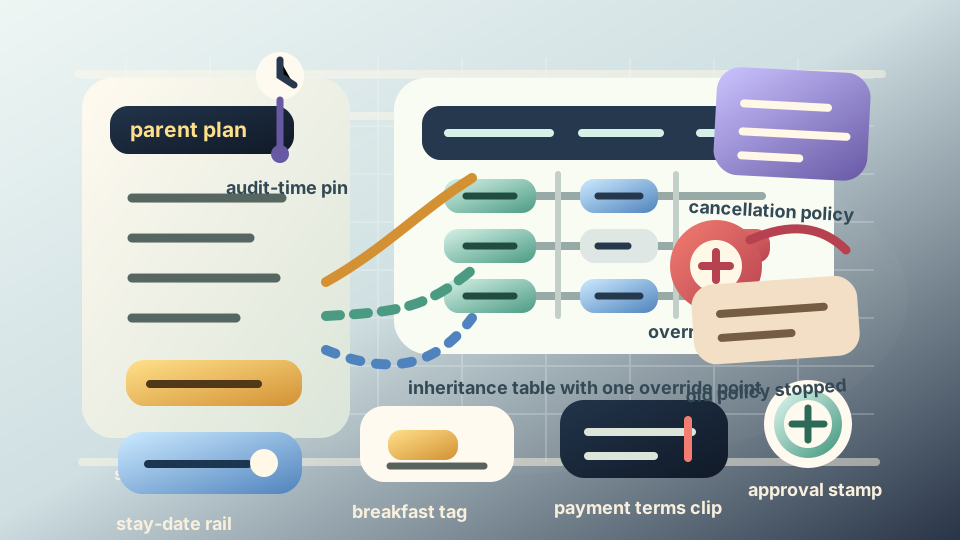
A rate-plan inheritance table can look like a family tree. The parent plan sits at the top. Child plans branch right into weekend promotion, corporate rate, and long-stay rate, each borrowing breakfast, cancellation, payment, and market rules from the parent. In the middle is one small red dot: override cancellation_policy. It does not shine like the total column. It decides earlier than the discount number whether this price will carry an old promise with it.
Inheritance is useful. Commercial teams do not need to re-enter breakfast inclusion, tax handling, cancel-by days, and market visibility for every child plan. Supplier operations gets fewer chances to copy the wrong field. But inheritance has momentum. Once a parent rule grows stale, a child plan that only inherits and never speaks up can sell a new price on the channel while still carrying last season’s cancellation window underneath.
The value of an override mark is not to break inheritance into confetti. Too many marks and the table becomes a field of exceptions, with no one sure which rule is still the main line. Too few and old policy gets to pretend it is still fresh. A good override says five things plainly: which column is covered, which stay date starts it, why the exception exists, who approved it, and when it should return to the parent or be reviewed again.
For HotelByte, that red dot should carry evidence weight. Before a price reaches a channel, the inheritance chain should show the source rule, override point, applied market, and audit time. When an order needs explanation, the same chain should point back to the policy used for that night. The reader may only see a clean cancellation sentence. Behind it, the old rule has been stopped from traveling inside a new price.