A Synonym Can Double an Inventory Item
The same bed can be called king and king size in one mapping file, and suddenly it becomes two sellable products.
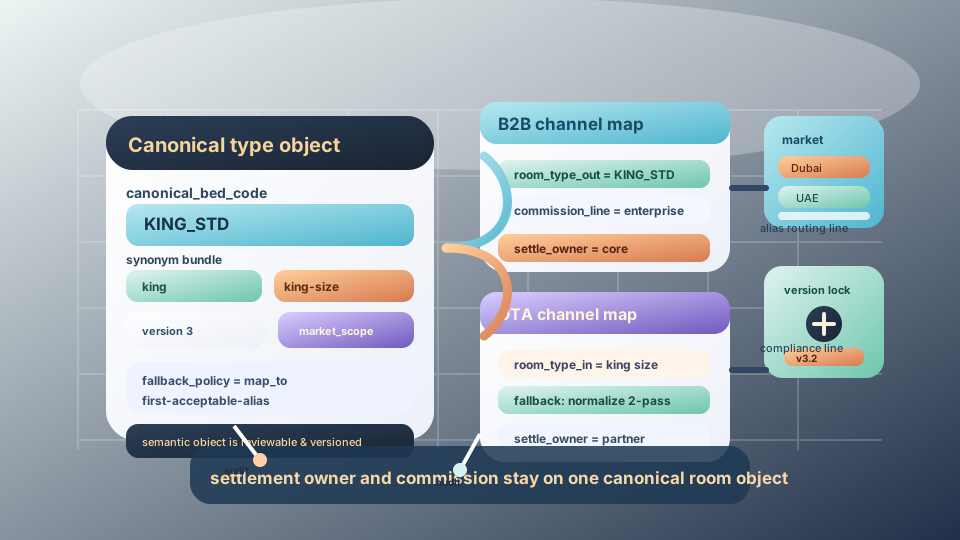
Free-text values in bed_type and channel_room_type can make “king,” “king size,” and “King Size” resolve to different products. That leaks settlement and commission across channels. A reviewable schema object with synonyms, versions, market scope, and fallback policy keeps one room tied to one meaning.
The most overlooked failure in supplier data is often not the field name but the value itself. One mapping row has bed_type = KING and another has bed_type = king size, each with the same room code and a note that says “applies to OTA.” The issue is not that a human cannot tell they are the same. The issue is that different systems cannot agree on one semantic token.
Channels route records with different strictness levels. Some systems match by prefix, some require strict enums, some run a second manual alias pass. One room can then appear as three distinct sellable items across B2B, corporate, and OTA outputs. The damage does not first appear in a dashboard; it shows up when settlement can no longer pin a booking to one commission line, and support has to explain what was actually sold.
A stable approach is to treat this as a room-type semantic object, not a loose text field: canonical_bed_code, synonym_bundle, market_scope, fallback_policy, version. It is not as loose as “anything can be accepted” and not as rigid as hardcoding only one spelling. It is a practical trade: extra cleanup and approval cost up front, fewer cross-channel interpretation incidents later.
At HotelByte, distribution should reduce ambiguity without drowning teams in manual overrides. Canonical alignment lets every channel read the same sellable object, lets settlement keep one owner line, and tells suppliers exactly which room variant is valid for which semantic version. The goal is not faster policy edits for their own sake; it is not to multiply room types across channels from the same bed.