A Cancellation Policy Clause Sets the Real Boundary
“Free cancellation” sounds like copy until it starts deciding settlement and channel promises.
Cancellation terms often appear as user-facing copy, but if policy_version, effective_window, refund_currency, and time_zone are not in one distribution object, refund disputes keep cycling between support, supplier, and finance. The clause should state who it applies to, which timezone governs it, and when it expires.
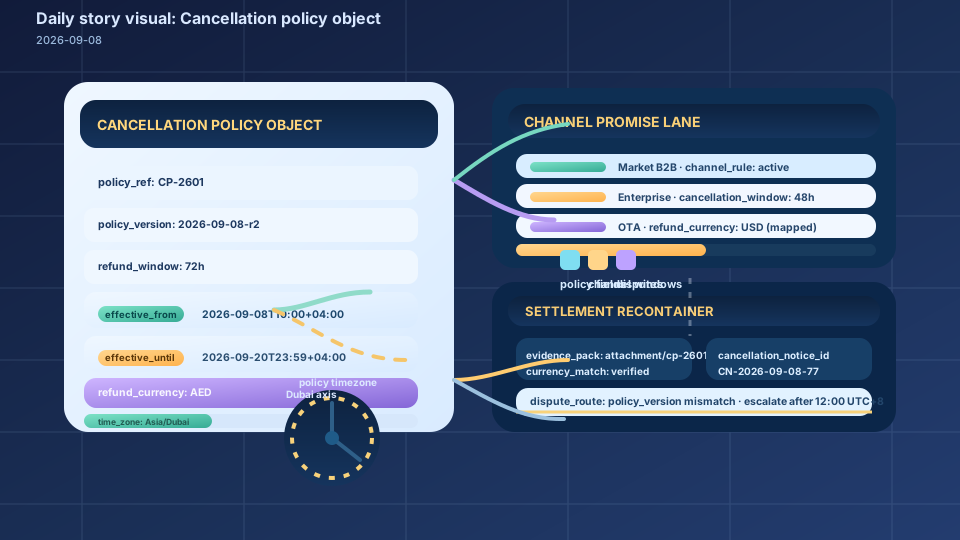
Cancellation is not a toggle. It is a promise that can be interpreted differently by every system that reads it. In practice, “48 hours free cancellation” may appear as three rules at once: a supplier policy version, a marketing-visible window, and an order-time timezone shift. If those versions are not one object, teams eventually argue about “which one is true” instead of resolving an order.
Like inventory control, cancellation policy needs an object, not only prose. A rule row should carry policy_version, refund_window, refund_currency, effective_from, effective_until, eligible_market, and disallow_reason. With those fields aligned, sales, channel distribution, and settlement can reference the same contract boundary instead of splitting “free cancellation” into ambiguous outcomes.
There is a practical tradeoff. Overly rigid policy tables can slow quick campaign support. Overly permissive policy text makes a single cancellation rule look flexible while behaving inconsistently across channels. The safer position is to keep time and version boundaries inside one cancellation-policy object, then allow temporary overrides with explicit source, version lineage, and precedence.
For HotelByte, cancellation should be more than a UI sentence. People care whether the result is dependable: when a refund is valid, where the exception is applied, and who owns the correction path. Moving policy from “readable copy” to “reviewable object” turns a seemingly smooth promise into an operational boundary that can actually be followed.