Everything About One Client, in One Drawer
When a client calls about last month’s trip, the answer should not be spread across five pages.
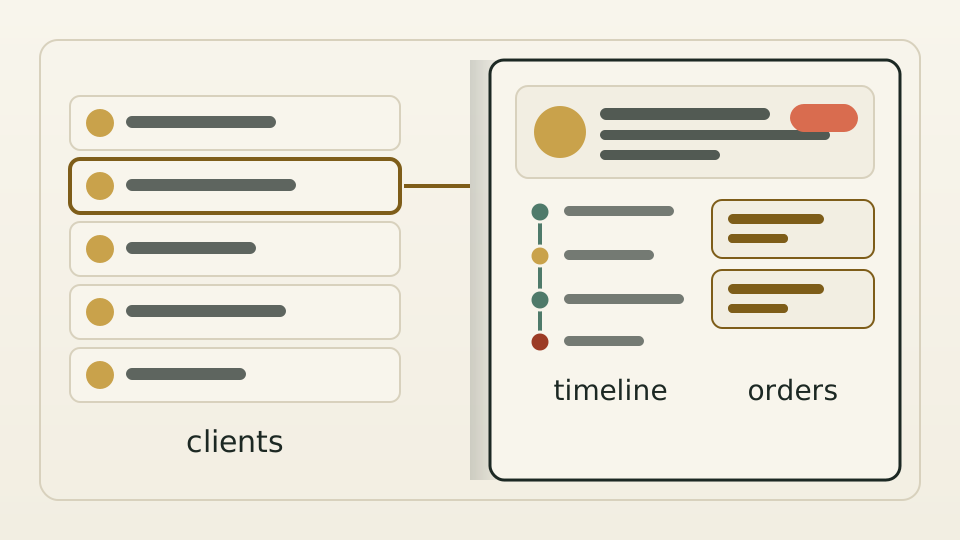
Click a client in the advisor workbench and a drawer slides in from the right: profile, a timeline built from order events, linked orders, follow-up notes, and stage and tag editing. Each section loads on its own, so one failing section does not take the whole drawer down.
A client calls: “Did the hotel confirm last time? I’d like to go back next month.” An independent travel advisor takes calls like this several times a day. The answers used to live in different places: the profile on one page, orders on another, and what was discussed mostly in the advisor’s memory. The advisor clicks around while the client waits.
Gathering everything on one screen is only half the job; the other half is keeping it trustworthy. A page that loads profile, timeline, orders and notes at once tends to fail as a whole when any one of them fails. The other common habit is filling gaps with plausible defaults, so a missing birthday quietly turns into some date.
Clicking a client in the advisor workbench now opens a drawer from the right instead of expanding the row. It holds the profile, including birthday, preferences and notes, with times shown in the seller’s time zone; a timeline built from order events such as placed, confirmed, paid and cancelled; linked orders; follow-up notes; and stage and tag editing. Each section loads, fails or stays empty on its own, and a missing field shows as two dashes, never as invented data.
One detail exists for phone calls. Move a client to a new stage and the list refreshes; if the list is filtered to the old stage, the row disappears. The drawer does not go blank with it. It keeps showing the client as it was when opened, so the call can finish. This client view is part of Stai Counselor, which is still in early access.