Book in the Currency You Were Quoted
Three amounts live on one order, each written for a different reader, and none may speak for another.
A hotel order carries at least three amounts: what the buyer pays, what the seller records in its books, and what the supplier is owed. The buyer price that booking returns and stores now stays in the currency of the selected quote; the conversion into the seller’s business currency is kept for internal accounting only.
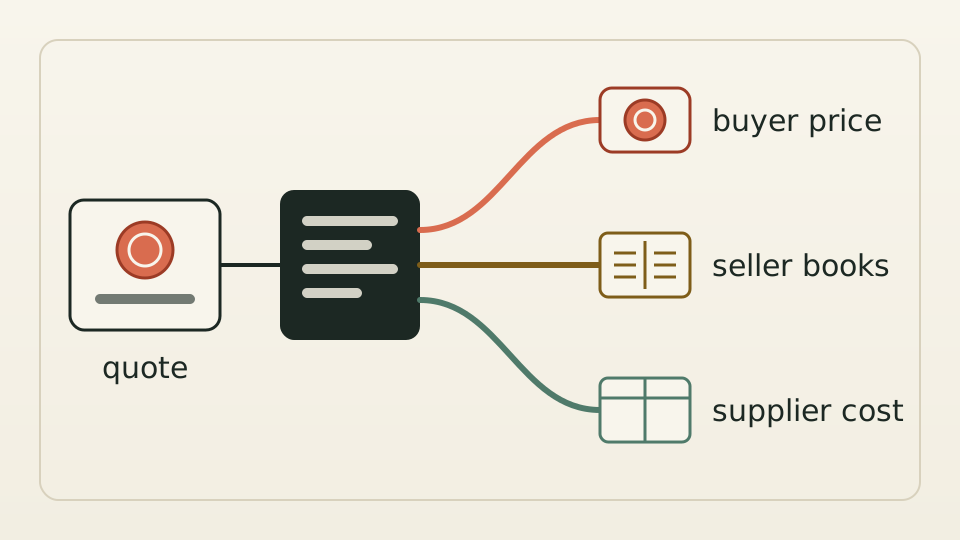
Every hotel order carries three amounts at once: the price the buyer pays, the amount the seller records in its own books, and the cost owed to the supplier. They are often in three currencies. A buyer may be quoted in US dollars while the seller keeps its books in another currency. All three are correct; they are written for different readers.
Trouble starts when they mix. If the order total at booking takes the seller’s accounting conversion while each room price stays in the quote currency, one order shows two currencies. An integrator checking “did I book the price I was quoted?” fails on the first line, even though the booking itself succeeded.
The price shown to the buyer is the total of the quote the buyer selected, in its currency. The amount in the seller’s business currency is stored separately as an accounting conversion, and the supplier cost is computed on its own; none overwrites another. Converting everything into one currency looks tidy, but it moves the buyer’s number away from the one they agreed to.
Buyers integrating through Stai API can check the change in one line: the currency in the booking response and in the stored order is the currency of the quote, so reconciliation never has to guess which figure was converted. Sellers keep accounting in their own business currency as before; that conversion simply stays in their books instead of appearing in front of the buyer.