Your Customers’ Booking Summary Is a Subset of Yours
The same row of figures, seen by a different person, should leave out the card that is not theirs.
The customer portal’s bookings page gains summary cards: bookings, room nights, total spend and cancellations for today, the last 7 days or the last 30 days, each compared with the period before. Same definitions as the seller’s back office, only the customer’s own bookings, in the customer’s own currency, and no profit card.
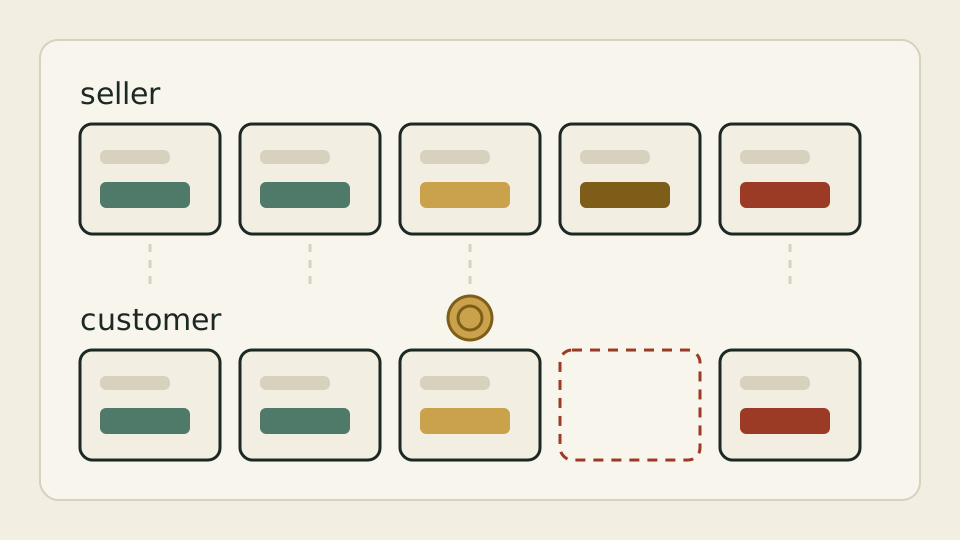
A seller’s back office has long had a row of summary cards above its bookings: bookings, room nights, sales, profit and cancellations, switchable by period and compared with the period before. When the seller’s customers signed in to their own portal, their bookings page had only a table. The customer side now has a summary too, built by deciding what belongs there rather than by copying the seller’s.
The definitions are the seller’s: the same counts of bookings, room nights and cancellations, the same periods, the last 7 days by default, each card compared with the previous period. The scope is the customer’s own bookings, matching their bookings list. Money appears as total spend, the buyer amount the customer pays, in the customer’s own default transaction currency rather than the seller’s business currency. If that currency is missing the card shows a dash; the page never converts on its own.
There is no profit card, and profit is never sent to the customer side: it is the seller’s business data. One smaller choice: on the seller’s page, switching the period also filters the list below. The customer page does not. Customers often book trips weeks ahead, and a default seven-day filter would hide trips booked earlier. The period drives the summary; the list stays whole.
Both pages use the same summary cards and the same menu for showing or hiding columns, and the seller’s page works as before. Customers can hide columns in their list; only the booking reference and booking date stay fixed. In the portal a seller opens to its customers, customers see their own bookings, in their own currency, counted the way the seller counts them, and never the seller’s profit.