When a Search Fails, Name the Right Party
A banner saying no supplier returned results sends people chasing a supplier that never had a problem.
Sometimes a search stops before sending a single supplier request, because an internal lookup on the platform ran out of time. Such failures no longer count against suppliers: the result says the platform’s own lookup failed, not a supplier, and the portal banner explains that no provider was queried and asks you to retry.
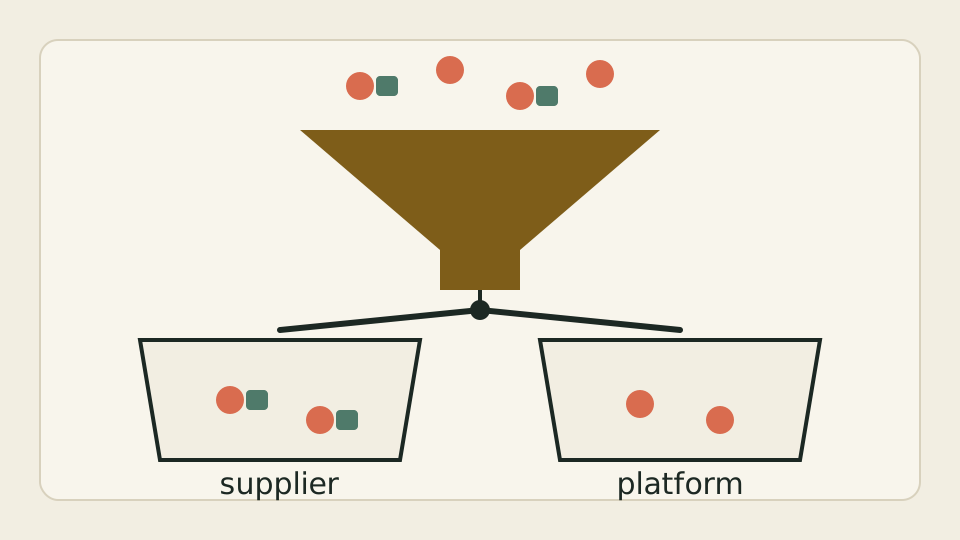
An operator sees a banner over the search page saying no provider returned usable results. The natural next step is to chase the suppliers: a service down, an expired credential, a quota used up. But some failures stop the search before any supplier request goes out, for example when an internal lookup on the platform does not finish within its time budget. Chasing suppliers then finds nothing, however long you look.
Every search ends with a verdict: a status, a reason and the party at fault. The old tally folded every error into the failure count, whether or not it could be traced to a supplier, so a platform error with no supplier attached still produced a supplier-failure verdict. One wrong word in the verdict sends a whole investigation the wrong way.
The failure count includes only failures traced to a specific supplier; errors that cannot be traced to any supplier are counted separately as platform errors. When only platform errors occurred, the verdict says the platform’s own lookup failed, not a supplier. When suppliers and the platform both failed, it still points at suppliers, because a supplier really did fail. In the first case the portal banner explains that an internal lookup failed before any provider was queried, asks you to retry and shows the request reference; other failures read as before.
This does not make search faster or failures rarer. Operators and integrators can see at a glance where to look first: the supplier side or ours. The verdict comes back with each search’s results, so integrating systems can make the same distinction; an older portal that has not been updated still shows its general message.